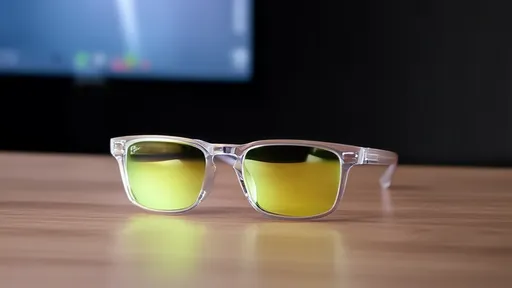
In recent years, blue light filtering glasses have surged in popularity, marketed as an essential tool for the digital age. Promising reduced eye strain, improved sleep, and protection from potential retinal damage, these glasses have found their way onto the faces of office workers, gamers, and students alike. The core technology is straightforward: a special coating or material that selectively blocks or absorbs a portion of high-energy visible (HEV) blue light emitted by screens and LED lighting. However, a less frequently discussed but immediately perceptible consequence of this technology is the phenomenon known as "color shift" or "yellowing," where the wearer's perception of the world takes on a warmer, often amber or yellow, tint. This inherent trade-off between potential visual comfort and color accuracy sits at the heart of a nuanced debate among users, optometrists, and researchers.
The science behind the color shift is rooted in the principles of light filtration. White light, whether from the sun or a digital device, is composed of a spectrum of colors, each with its own wavelength and energy level. Blue light resides at the high-energy, short-wavelength end of the visible spectrum. To reduce the transmission of this specific band of light, the lenses must absorb or reflect it. The most common method involves incorporating filtering compounds that target these wavelengths. By removing a portion of the blue light, the overall light that passes through the lens becomes deficient in blue, causing the brain to perceive the complementary color more strongly. This results in the characteristic yellowish or amber hue that defines the color shift. The intensity of this tint is directly proportional to the level of blue light blockage; glasses claiming to block 50% of blue light will have a much subtler tint than those blocking 90% or more.
Proponents of blue light glasses argue that this minor alteration in color perception is a small price to pay for the significant benefits they can provide. The primary advertised advantage is the reduction of digital eye strain, also known as computer vision syndrome. Symptoms include dry eyes, headaches, blurred vision, and neck and shoulder pain, often resulting from prolonged screen use. The theory posits that HEV blue light scatters more easily than other visible light, reducing contrast and forcing the eyes to work harder to focus. By filtering out this problematic light, the glasses theoretically increase contrast and reduce this scatter, thereby easing the burden on the ocular muscles. For many users, this translates to a tangible feeling of relief after a long day at the computer, a subjective experience that forms the bedrock of the product's popularity.
Beyond immediate comfort, the most scientifically plausible benefit involves the regulation of circadian rhythms. The human body relies on natural light cues to manage its internal sleep-wake clock. Specifically, blue light wavelengths are known to suppress the production of melatonin, the hormone responsible for signaling sleepiness. Exposure to blue light-rich screens in the evening can trick the brain into believing it is still daytime, delaying sleep onset and disrupting sleep quality. Here, blue light glasses, particularly those with a stronger amber tint intended for evening use, can serve as a useful intervention. By diminishing blue light exposure after sunset, they may help facilitate the natural production of melatonin, potentially leading to easier and more restful sleep. This application has garnered more support from the scientific community than claims about preventing retinal damage, which, while biologically possible from extreme exposure, lacks conclusive evidence from typical screen use.
However, the color shift introduced by these lenses is not merely an aesthetic inconvenience; it presents genuine functional drawbacks. The most obvious impact is on color-critical work. For graphic designers, video editors, photographers, and artists, accurate color perception is non-negotiable. The yellow tint inherently distorts color values, making whites appear off-white and altering the perception of blues and purples. Relying on blue light glasses while performing such tasks could lead to poor decisions and inaccurate work, necessitating their removal during any activity where color fidelity is paramount. This creates a practical hassle, constantly putting on and taking off glasses throughout the workday.
Furthermore, the adaptation period can be jarring for some users. The brain is remarkably adept at color correction, and many long-term wearers report that the yellow tint becomes less noticeable over time as their perception adjusts. However, this adaptation is not universal. Some individuals experience persistent dizziness, disorientation, or a feeling of visual "unreality" that they cannot overcome. This can be particularly pronounced when switching between wearing the glasses and not, as the world appears to rapidly shift between its true colors and a warmed-toned version. For these users, the quest for comfort paradoxically introduces a new source of visual stress and discomfort, negating the very benefit they sought.
The debate is further complicated by the question of necessity. The American Academy of Ophthalmology (AAO) has stated that there is no scientific evidence that the blue light from digital devices causes eye damage. They attribute digital eye strain largely to how we use our screens—poor posture, improper viewing distances, infrequent blinking, and uncorrected vision problems—rather than the light itself. Their recommended solutions focus on ergonomic adjustments and the 20-20-20 rule (every 20 minutes, look at something 20 feet away for 20 seconds) rather than specialized eyewear. From this perspective, the color shift is an unnecessary compromise for a solution that addresses a problem potentially rooted in user habit, not in light emission.
Ultimately, the decision to use blue light filtering glasses becomes a deeply personal cost-benefit analysis. There is no one-size-fits-all answer. For the average office worker who does not engage in color-sensitive tasks and who subjectively feels a reduction in eye strain or improved sleep, the mild color distortion may be an acceptable trade-off. The glasses function as a tangible tool, a psychological and perhaps physiological reminder to be mindful of screen time. For them, the benefits of perceived comfort outweigh the minor alteration of their visual field.
Conversely, for professionals in visual fields, or for individuals who are highly sensitive to the tinting effect, the drawbacks are likely to outweigh any potential advantages. The intrusion on their work accuracy and the potential for new forms of visual discomfort make the glasses more of a hindrance than a help. For this group, adhering to the AAO's behavioral recommendations—managing screen time, optimizing ergonomics, and using night mode settings on devices—may provide relief without the compromise of color fidelity.
The market for blue light glasses is a testament to a growing desire to mitigate the side effects of our increasingly digital lives. The color shift phenomenon is the physical manifestation of the trade-off we are willing to make. It represents a choice between the potential for increased comfort and the preservation of perfect visual clarity. As research continues to evolve, a more nuanced understanding may emerge. Perhaps future innovations will yield lenses that can selectively filter the most disruptive frequencies of blue light without imparting a noticeable tint, finally resolving the dilemma. Until then, the yellow tint remains a visible symbol of our attempt to find balance between the demands of technology and the needs of our own biology.

By /Aug 26, 2025

By /Aug 26, 2025

By /Aug 26, 2025

By /Aug 26, 2025

By /Aug 26, 2025
By /Aug 26, 2025
By /Aug 26, 2025

By /Aug 26, 2025

By /Aug 26, 2025
By /Aug 26, 2025

By /Aug 26, 2025

By /Aug 26, 2025

By /Aug 26, 2025

By /Aug 26, 2025

By /Aug 26, 2025
By /Aug 26, 2025
By /Aug 26, 2025

By /Aug 26, 2025

By /Aug 26, 2025
By /Aug 26, 2025
