Finding the right lumbar support isn't just about comfort—it's about spinal health. One of the most critical yet often overlooked aspects of using a lumbar cushion is the precise adjustment of the support point height. This isn't a one-size-fits-all scenario; your body's unique proportions and your seated posture determine where that support should be placed to effectively align your spine and relieve pressure.
When we talk about the lumbar support point, we're referring to the specific area of the cushion designed to make contact with and support the natural inward curve of your lower back, known as the lumbar lordosis. If this point is too high or too low, it can do more harm than good, potentially exaggerating the curve or failing to support it altogether, leading to discomfort or even long-term postural issues.
The consequences of improper support height are real and tangible. Set it too high, and you might feel an uncomfortable pressure against your mid-back or rib cage, forcing your upper spine into an awkward backward arch. Set it too low, and you'll miss the lumbar curve entirely, allowing your lower back to slump into a posterior tilt, which strains the spinal discs and surrounding muscles. The goal is to have the support nestle perfectly into that lumbar curve, promoting a neutral spinal alignment.
So, how do you find this elusive perfect height? It begins with self-awareness. Sit upright in your usual chair, as you normally would for work or relaxation. Gently lean back and pay close attention to your lower back. Can you feel a gap between your back and the chair? Run your hand along your spine until you find the point where your back naturally curves inward the most. This is your personal lumbar point—the bullseye for your support.
Once you've identified this point, the next step is measurement. While seated, have a friend measure the vertical distance from the surface of your chair seat to the center of your lumbar curve. This measurement, typically between 6 to 10 inches for most adults, is your target height for the support point of your cushion. This number is your golden ticket to personalized comfort.
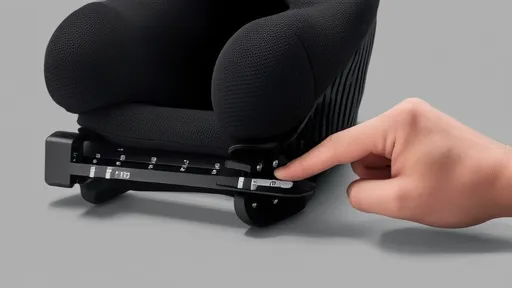
Most modern ergonomic lumbar pillows are designed with this need for customization in mind. They often feature adjustable straps or bands that allow you to shift the entire cushion up or down the back of your chair. Don't just strap it on and forget it. Take the time to experiment. Move it incrementally, sitting back each time to assess the feel. You are looking for a sensation of gentle, firm pressure that fills the curve without pushing you forward.
Your seated posture also plays a pivotal role in this equation. The ideal support height can shift slightly depending on whether you're sitting bolt upright, leaning back slightly, or working at a desk. If your chair reclines, you may find you need to readjust the support point when you change positions. Think of it as a dynamic relationship, not a set-and-forget fixture. For those who use multiple chairs throughout the day—perhaps an office chair and a car seat—consider taking that crucial measurement for each environment, as the seat depth and angle will differ.
For individuals who are taller or shorter than average, this process is non-negotiable. Standard settings are based on a mythical "average" person. If you are on the extremes of the height spectrum, your lumbar curve is likely located higher or lower than a pre-set cushion assumes. The same applies to body types; someone with a longer torso will have a different lumbar position than someone with shorter torso but the same overall height.
Beyond the initial setup, listen to your body's feedback. A slight feeling of support is good, but any sharp pressure points, numbness, or a need to squirm constantly to get comfortable are clear signs that the height is incorrect. It shouldn't feel like an obstacle. The right support should feel almost unnoticeable because it's working in harmony with your spine, not fighting against it.
In essence, mastering the height of your lumbar support point is a simple yet profoundly effective act of self-care for your back. It transforms a generic accessory into a tailored postural tool. By investing a few minutes to find and set your perfect height, you empower yourself to sit smarter, reduce fatigue, and protect your spinal health for the long haul. Your back will thank you for years to come with every comfortable, well-supported hour you spend in your chair.
By /Aug 26, 2025

By /Aug 26, 2025

By /Aug 26, 2025

By /Aug 26, 2025

By /Aug 26, 2025

By /Aug 26, 2025

By /Aug 26, 2025

By /Aug 26, 2025
By /Aug 26, 2025
By /Aug 26, 2025

By /Aug 26, 2025
By /Aug 26, 2025
By /Aug 26, 2025

By /Aug 26, 2025

By /Aug 26, 2025
By /Aug 26, 2025

By /Aug 26, 2025

By /Aug 26, 2025

By /Aug 26, 2025

By /Aug 26, 2025
