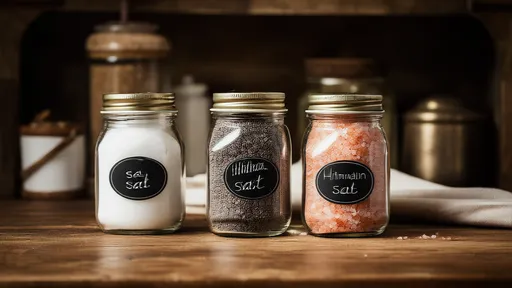
In the world of culinary arts, salt reigns supreme as the undisputed king of flavor. While common table salt has long been a kitchen staple, a growing number of chefs and home cooks are exploring more sophisticated options that promise not only enhanced taste but also unique textures and mineral complexities. Among these premium varieties, sea salt, rock salt, and Himalayan pink salt have emerged as particularly popular choices, each with distinct characteristics that set them apart.
Sea salt is harvested through the evaporation of seawater, typically in large, shallow ponds under the sun's natural warmth. This ancient method of production allows sea salt to retain a broad spectrum of trace minerals from the ocean, such as magnesium, calcium, and potassium, which contribute to its nuanced flavor profile. The texture of sea salt can vary dramatically, from fine grains to large, flaky crystals, with the latter often being favored as a finishing salt for its satisfying crunch and slow dissolution. The taste is generally described as briny and fresh, with a cleaner salinity than processed table salt, making it an excellent all-purpose seasoning for everything from roasted vegetables to seafood.
Rock salt, on the other hand, is mined from underground salt deposits that were formed by the evaporation of ancient seas millions of years ago. These deposits are typically found in vast beds or domes and are extracted using traditional mining techniques. Rock salt crystals are usually large, coarse, and irregular in shape, and they often contain impurities like clay and other minerals that can affect their color and flavor. While not always ideal for direct culinary use due to its gritty texture, rock salt is famously employed in making ice cream or for crusting meats, where it serves as an effective cooling or cooking medium rather than a seasoning. Its flavor tends to be robust and less refined than sea salt, with earthy undertones that reflect its mineral-rich composition.
Perhaps the most visually striking of the three, Himalayan pink salt is a type of rock salt mined primarily from the Punjab region of Pakistan, near the foothills of the Himalayas. Its distinctive pink hue comes from trace amounts of iron oxide, or rust, which also imparts a subtle mineral flavor that many describe as more complex and less harsh than that of regular table salt. Himalayan salt is often marketed as one of the purest forms of salt available, having been preserved in pristine environments free from modern pollutants. It is commonly available in fine grains, coarse crystals, and even large blocks that can be used as cooking surfaces or serving platters. In addition to its culinary applications, Himalayan pink salt is also popular in wellness circles, where it is used in salt lamps, spa treatments, and even as a decorative element.
When it comes to nutritional content, all three salts are primarily composed of sodium chloride, but their minor mineral components can vary significantly. Sea salt is celebrated for its diverse mineral profile, which mirrors that of seawater, while rock salt may include a wider array of trace elements depending on its geological source. Himalayan pink salt is particularly noted for containing up to 84 different minerals, though these are present in such small quantities that their health impact is likely negligible. Ultimately, the choice between these salts often boils down to personal preference, intended use, and aesthetic considerations rather than substantial nutritional differences.
In the kitchen, each type of salt offers unique advantages. Sea salt's versatility makes it suitable for both cooking and finishing, its briny brightness enhancing a wide range of dishes. Rock salt, with its coarse texture and high melting point, is invaluable for technical applications like ice cream making or salt-crust baking. Himalayan pink salt, beyond its culinary uses, brings a touch of elegance to the table, its rosy crystals serving as a conversation starter as much as a seasoning. As consumers become more discerning about the origins and qualities of their food, these artisanal salts represent not just ingredients, but experiences—each telling a story of terroir, tradition, and taste.
The evolution of salt from a simple preservative to a gourmet ingredient reflects a broader shift in how we think about food. No longer merely functional, salt is now appreciated for its ability to elevate dishes through texture, flavor, and visual appeal. Whether you're sprinkling flaky sea salt over a chocolate tart, using rock salt to churn homemade ice cream, or grating Himalayan pink salt over a steak, you're participating in a culinary tradition that celebrates diversity and craftsmanship. So the next time you reach for the salt cellar, consider reaching beyond the ordinary—you might just discover a new dimension of flavor.
By /Sep 9, 2025
By /Sep 9, 2025
By /Sep 9, 2025
By /Sep 9, 2025
By /Sep 9, 2025

By /Sep 9, 2025
By /Sep 9, 2025
By /Sep 9, 2025
By /Sep 9, 2025
By /Sep 9, 2025
By /Sep 9, 2025
By /Sep 9, 2025
By /Sep 9, 2025
By /Sep 9, 2025
By /Sep 9, 2025

By /Sep 9, 2025
By /Sep 9, 2025
By /Sep 9, 2025
By /Sep 9, 2025
By /Sep 9, 2025
