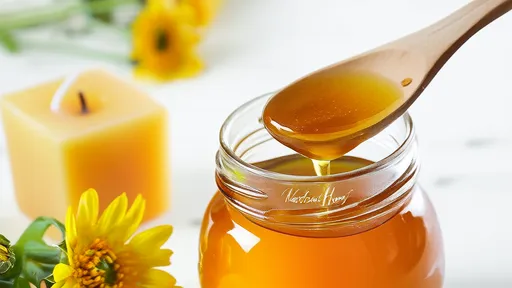
Honey has captivated human imagination for millennia, not just as a natural sweetener but as a substance shrouded in mystery and reverence. Among its most fascinating qualities is its legendary ability to resist spoilage. Archaeologists have discovered pots of honey in ancient Egyptian tombs that remain edible after over three thousand years. This remarkable longevity stems from honey’s unique chemical composition. It is a supersaturated sugar solution, primarily fructose and glucose, with very low water content—typically around 17-18%.
This low water activity creates an environment where microorganisms simply cannot survive or reproduce. Furthermore, honey is naturally acidic, with a pH between 3 and 4.5, which further inhibits bacterial growth. Bees also contribute to its preservation by producing the enzyme glucose oxidase during the honey-making process. This enzyme, when diluted, slowly converts small amounts of glucose into gluconic acid and hydrogen peroxide, the latter being a well-known antiseptic. This potent combination of high sugar concentration, low moisture, acidity, and mild antiseptic properties is the secret behind honey’s eternal shelf life.
However, the modern honey market is fraught with deception. The very properties that make pure honey so stable are often mimicked or undermined by adulteration. Unscrupulous producers cut pure honey with cheaper syrups like high-fructose corn syrup, rice syrup, or invert sugar to increase volume and profits. They may also harvest honey prematurely and artificially dehydrate it, or feed bees sugar water instead of allowing them to forage on natural nectar, resulting in a product that lacks the complex nutritional profile of true honey. This widespread fraud makes it crucial for consumers to know how to discern the real from the fake.
One of the most common home tests is the thumb test. Place a small drop of honey on your thumbnail. If it stays intact and does not run or drip, it is likely pure. Adulterated honey, being more watery, will spread or drip. The water test is another simple method. Fill a glass with water and add a tablespoon of honey. Pure honey will lump together and settle at the bottom without dissolving. Fake honey will readily dissolve, clouding the water. For a more dramatic demonstration, try the flame test. Dip the tip of a dry matchstick into honey and then try to strike it. If the honey is pure, the match will light because the sugars are combustible. Adulterated honey, with its higher moisture content, will prevent ignition.
Observing honey’s behavior over time can also be revealing. Real, raw honey will eventually crystallize or granulate. This is a natural process where glucose separates from the water and forms crystals. The speed and texture of crystallization depend on the nectar source. Adulterated honey or honey that has been ultra-filtered and pasteurized to an extreme will remain in a perpetually liquid state. If you have a jar that has crystallized, you can gently warm it in a water bath to return it to its liquid form—this does not degrade its quality. The absence of crystallization in a jar that has been stored for months is often a red flag.
Beyond these physical tests, reading the label is your first line of defense. Look for key terms like “raw,” “unpasteurized,” or “unfiltered.” Raw honey has simply been strained to remove bits of wax and debris but has not been heated to high temperatures, preserving its natural enzymes, antioxidants, and subtle flavors. “Pure honey” is a less meaningful term, as adulterated products can still be labeled as such. Be wary of honey that is unusually clear and never crystallizes, as it has likely been ultra-processed. The origin can also be a clue; while not a hard rule, honey from specific, traceable local apiaries or reputable regions known for production (like Manuka from New Zealand) is less likely to be fraudulent than generic blends from unknown international sources.
While all pure honey shares the core miraculous properties of preservation, the source of the nectar—the flowers the bees forage on—imparts unique characteristics, flavors, colors, and potential health benefits. This has given rise to the concept of monofloral honey, where the bees primarily visit one type of flower, resulting in a honey with a distinct profile. It is a common misconception that these different types of honey have vastly different nutritional bases; the primary sugars remain the same. The differences lie in the minor components: the specific polyphenols, antioxidants, enzymes, and micronutrients that vary from plant to plant.
Manuka honey, from the Manuka bush in New Zealand, is perhaps the most famous and researched monofloral honey. Its unique selling point is Methylglyoxal (MGO), a compound with potent antibacterial properties that is present in much higher concentrations than in other honeys. This gives Manuka honey a powerful non-peroxide antibacterial activity (NPA), which remains stable even when exposed to light and heat that would break down the hydrogen peroxide in standard honey. Scientific studies have investigated its efficacy in wound healing, particularly for burns and leg ulcers, and in inhibiting the growth of bacteria like Staphylococcus aureus. The strength of Manuka honey is graded on a Unique Manuka Factor (UMF) or MGO scale, with higher numbers indicating greater antibacterial potency.
In contrast, the delicate and light-colored Acacia honey, from the Black Locust tree, is known for its high fructose content, which makes it slow to crystallize and gives it a mild, sweet, vanilla-like flavor. Its gentle nature and high fructose-to-glucose ratio mean it has a lower glycemic index than many other honeys, causing a slower rise in blood sugar, which can be preferable for some. It is often touted for digestive health and as a soothing agent for the respiratory system.
Dark, robust Buckwheat honey is a nutritional powerhouse. Its deep color signals a high concentration of antioxidants, particularly polyphenols. Studies have shown that darker honeys like buckwheat can have an antioxidant content that rivals that of some fruits and vegetables. This high antioxidant capacity is linked to neutralizing free radicals in the body, potentially reducing oxidative stress and inflammation. It has a strong, molasses-like flavor and is a traditional remedy for coughs and colds, with some research supporting its use as a cough suppressant.
Other notable varieties include Clover honey, a mild and popular all-purpose honey, and Eucalyptus honey, which carries a subtle hint of menthol and is often used for its soothing effects on cold symptoms. Orange Blossom honey offers a citrusy aroma and flavor, while Lavender honey from the Mediterranean is prized for its floral notes. It is critical to understand that while these honeys contain compounds from their source plants, the scientific evidence for specific therapeutic effects beyond general antioxidant and antibacterial properties is often preliminary or based on traditional use. They should be seen as complementary to a healthy diet, not as medicine.
Ultimately, the world of honey is as complex as it is sweet. Its timeless nature is a testament to the ingenious work of bees and the perfection of nature. Navigating the market requires a discerning eye, a willingness to perform simple tests, and an appreciation for the story behind the label. Whether you choose a common wildflower blend or a specialized, potent monofloral variety, seeking out raw, unadulterated honey ensures you experience the full spectrum of flavor and potential benefits that this golden nectar has to offer. It connects us to an ancient tradition of beekeeping and reminds us of the intricate and valuable relationships within our natural world.
By /Sep 9, 2025
By /Sep 9, 2025
By /Sep 9, 2025
By /Sep 9, 2025
By /Sep 9, 2025
By /Sep 9, 2025
By /Sep 9, 2025
By /Sep 9, 2025
By /Sep 9, 2025
By /Sep 9, 2025
By /Sep 9, 2025
By /Sep 9, 2025
By /Sep 9, 2025
By /Sep 9, 2025
By /Sep 9, 2025
By /Sep 9, 2025
By /Sep 9, 2025
By /Sep 9, 2025
By /Sep 9, 2025
By /Sep 9, 2025
